
Outcome
In 2025, the Workforce Development Council of Seattle–King County was honored with the WIOA Trailblazer Award by the National Association of Workforce Boards.
“The WDC was selected for its innovative, community-driven strategic planning efforts … and the creation of a subrecipient funding model that expanded partnerships with community organizations, provided digital access, and supported workforce solutions for underserved populations.” — NAWB Award Announcement
In shaping the award application, I framed the WDC’s seven-year transformation as a cohesive story and highlighted the innovative subrecipient funding model—both of which were cited directly in the award announcement.
The Challenge
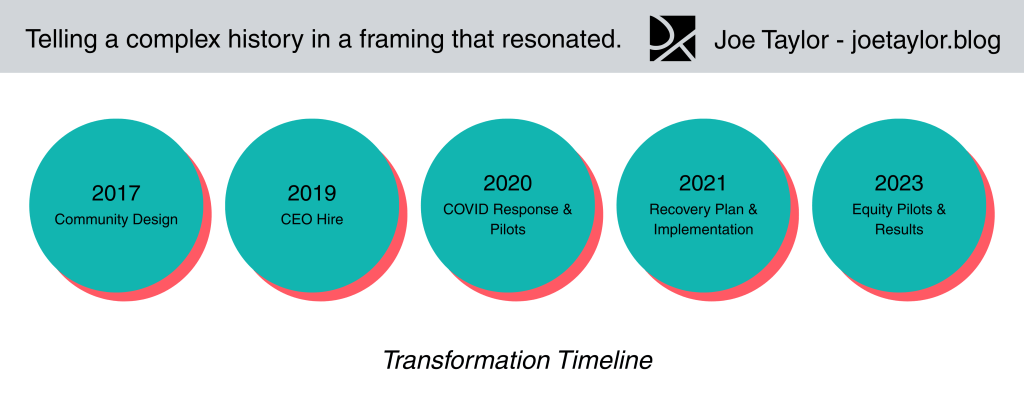
How do you translate seven years of transformation—spanning community design sessions, a CEO transition, COVID crisis response, and equity-driven strategic planning—into a narrative that resonates with a national audience?
My Role
- Narrative Development: Researched primary sources and synthesized the WDC’s transformation history into a compelling award submission, explicitly credited for the win.
- Speechwriting: Drafted the executive remarks for award acceptance at the NAWB Forum in Washington, D.C.
- Public Storytelling: Adapted the narrative into a Transformation Story webpage, creating graphics, banners, and a timeline to make the story accessible to a wider audiences.
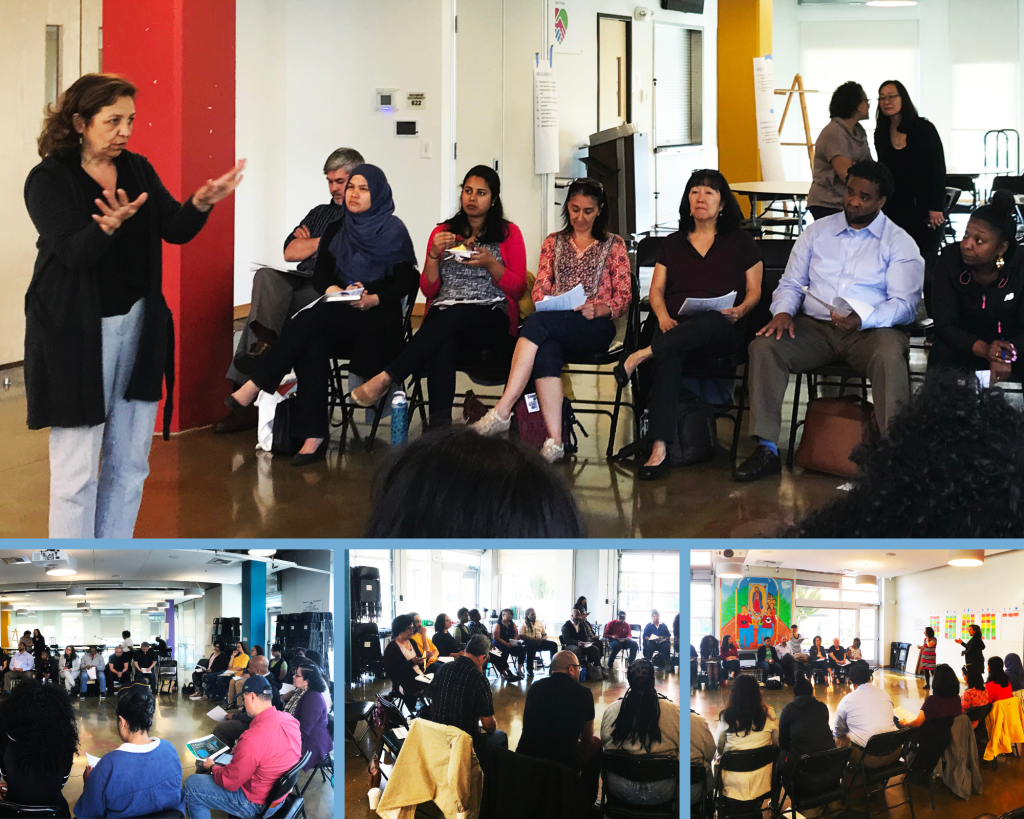
- Design & Visuals: Produced supporting visuals to frame primary materials, including strategy diagrams, community design collages, and branded imagery.
Telling a Different Kind of Story
When our team applied for the WIOA Trailblazer Award, I was tasked with writing the lead narrative. Instead of confining the story to a single year, I traced a seven-year arc—grounded in the 2018 community design sessions—to show how principles established by community input shaped every milestone that followed.
In the application, I framed those origins as the foundation for breakthrough innovations: the subrecipient funding model, which balanced community investment with accountability, and equity-driven initiatives in digital access and workforce solutions for underserved populations.
The approach worked. At the award ceremony, NAWB recognized not just the innovations but the community-driven planning process that produced them—an understanding that would have been lost with a narrower frame. With more than 550 workforce boards nationwide, this recognition placed Seattle–King County among the most innovative, and my storytelling played a direct role in that recognition.
Why the Story Mattered
Winning the award secured national recognition for Seattle-King County’s equity-centered approach, but the impact went deeper. The narrative I created gave staff and board a shared language for the WDC’s transformation, and a way to present that journey to partners and the public.
For me, it demonstrated how strategic storytelling—grounded in research and deliberate framing—can turn a complex system change into a narrative that inspires, clarifies purpose, and reminds people why the work matters.
 Joe Taylor